




Menu

Peeling Paint & Wallpaper in Louisville – Expert Diagnosis of Hidden Water Damage Before It Spreads

Louisville's humidity and Ohio River moisture patterns cause chronic paint and wallpaper failures that signal serious water intrusion. We identify the source, stop the damage, and restore your surfaces correctly.

Slider Image 1
Slider Image 2
Slider Image 3
Slider Image 4
Slider Image 5
Slider Image 7
Slider Image 8
Slider Image 9
Slider Image 10
Slider Image 11

Why Your Walls Are Peeling in Louisville

You walk past the same spot every day. The paint is bubbling near the baseboard. The wallpaper is lifting at the seam. You tell yourself it's cosmetic. It's not.

Peeling paint and wallpaper are visible symptoms of water intrusion. In Louisville, where the Ohio River keeps ambient humidity above 70 percent for much of the year, moisture finds every weak point in your building envelope. Add summer thunderstorms that dump two inches in an hour, and you have constant hydrostatic pressure against foundations and exterior walls.

Blistering wall paint near windows signals failed flashing or caulking. Flaking paint on ceilings points to roof leaks or condensation in the attic. Loose wallpaper in bathrooms or kitchens means moisture is wicking through drywall from plumbing leaks or poor ventilation.

The mistake most property owners make is repainting over the problem. You might get six months of coverage before the bubbling returns. That's because the water source is still active. Every day the moisture sits behind that wall, you're growing mold, rotting framing, and compounding the repair cost.

Louisville's clay soil shifts with seasonal wet and dry cycles. That movement cracks foundations and opens pathways for groundwater. Homes in Old Louisville and the Highlands with crawl spaces see chronic moisture intrusion during spring floods. If your paint is peeling on first-floor walls, check your crawl space for standing water.

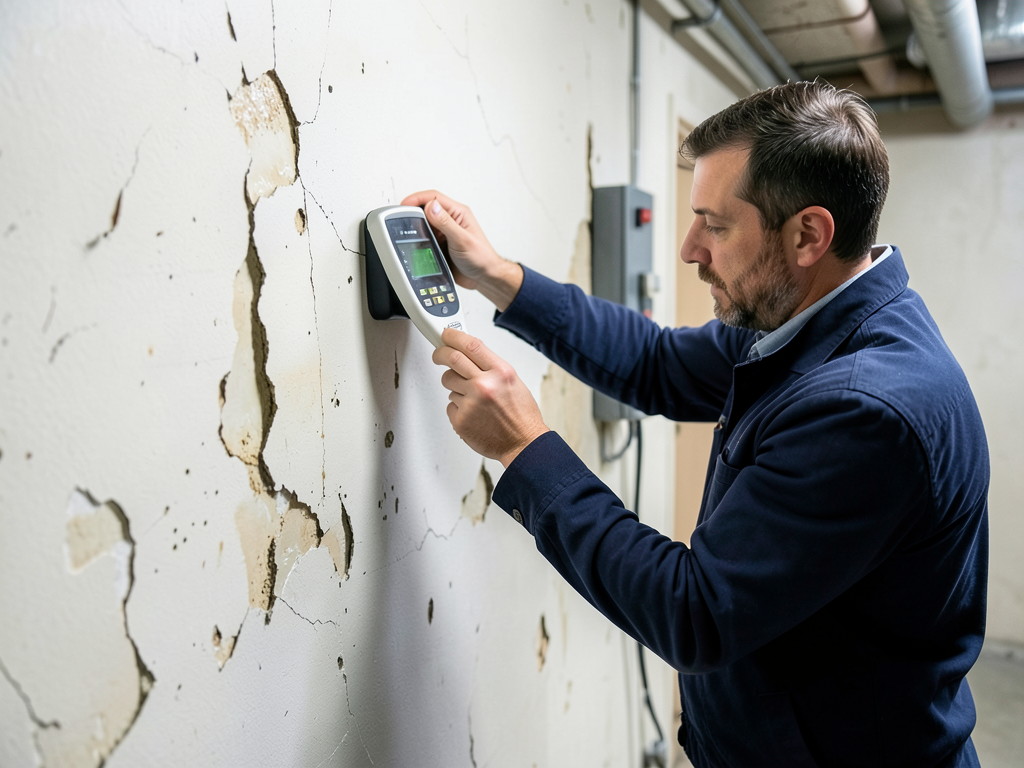
We trace peeling paint back to its source. We don't guess. We use thermal imaging and moisture meters to map the intrusion, then we fix it correctly.

Why Your Walls Are Peeling in Louisville
How We Stop Water Damage Behind Peeling Paint

How We Stop Water Damage Behind Peeling Paint

Surface fixes fail because they ignore the water source. We treat peeling paint as a diagnostic clue, not a cosmetic problem.

Step one is moisture mapping. We use infrared cameras to scan walls for temperature differentials that indicate wet insulation or active leaks. Moisture meters give us exact readings at multiple depths in the wall cavity. This tells us whether the water is coming from outside, from plumbing, or from condensation.

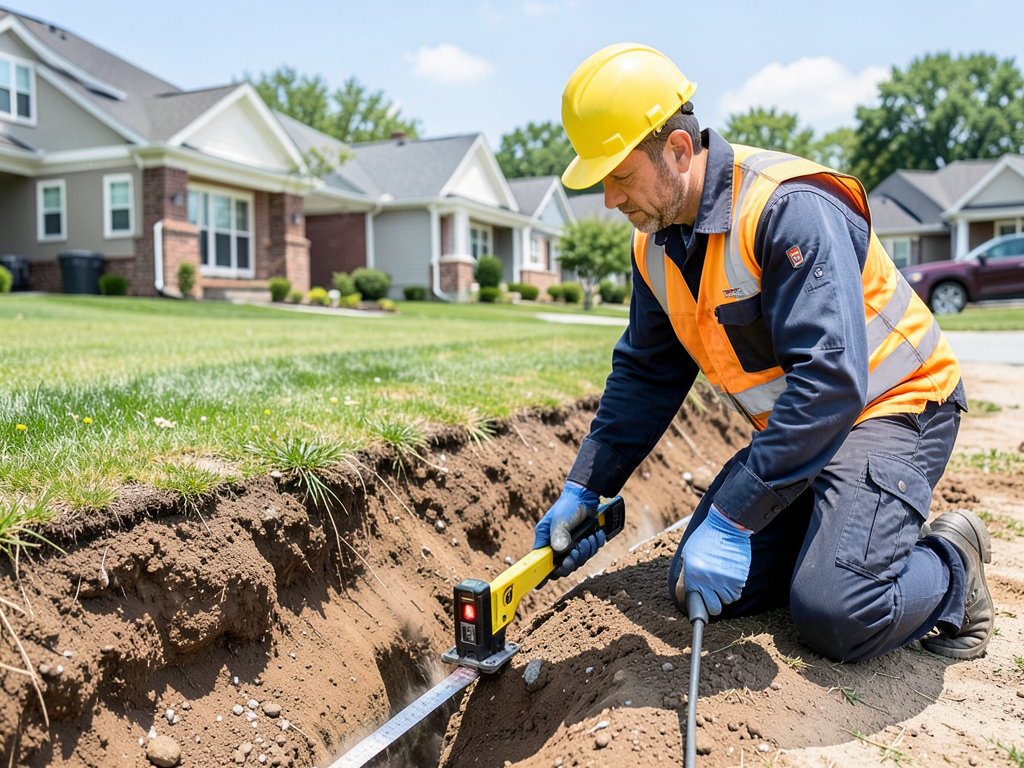
If the paint is lifting near exterior walls, we inspect grading, downspouts, and foundation drainage. Water should flow away from your home at a minimum two percent grade for the first ten feet. In Louisville's flat topography, especially in neighborhoods like St. Matthews or Middletown, improper grading sends roof runoff straight into the foundation.

Interior sources are harder to spot. A slow leak in a supply line inside the wall can run for months before the paint blisters. We pressure test plumbing systems and check for hidden leaks behind fixtures. Bathroom and kitchen walls get extra scrutiny because tile grout and caulking fail over time.

Once we locate the source, we stop it. That might mean rerouting a downspout, sealing a foundation crack with polyurethane injection, or replacing a corroded pipe. Then we dry the structure using commercial dehumidifiers and air movers. We don't close the wall until moisture readings return to baseline.

Only after the cavity is dry do we address the cosmetic damage. We remove compromised drywall, treat framing with antimicrobial solution, and install mold-resistant materials. Then we prime with vapor barrier paint and finish to match your existing surfaces.

What Happens When We Investigate Your Peeling Walls

Peeling Paint & Wallpaper in Louisville – Expert Diagnosis of Hidden Water Damage Before It Spreads
01

Source Detection

We arrive with thermal imaging cameras and penetrating moisture meters. You show us the peeling paint or loose wallpaper. We scan the entire wall assembly, not just the visible damage. We check adjacent rooms, the attic above, and the crawl space below. Water travels along framing and through cavities, so the leak source is often several feet from where the paint is bubbling.
02

Controlled Drying

Once we stop the water intrusion, we extract standing moisture from wall cavities using negative air pressure and desiccant dehumidifiers. We monitor humidity levels every six hours. Louisville's ambient humidity means we can't rely on passive drying. We create controlled conditions that pull moisture from building materials without warping framing or cracking plaster. This phase takes 48 to 72 hours depending on saturation depth.
03

Material Restoration

After confirming dry readings below 12 percent moisture content, we remove damaged drywall and insulation. We treat exposed framing with antimicrobial spray and install mold-resistant drywall. We use vapor barrier primer on all new surfaces to prevent future moisture transmission. Then we match your existing texture and paint. The result is a wall that looks correct and stays dry.

Why Louisville Properties Need Local Water Damage Expertise

National restoration chains follow corporate protocols. They don't account for Louisville's specific moisture challenges.

We understand how the Ohio River affects groundwater tables. We know that spring flooding in low-lying areas like Shively and Pleasure Ridge Park creates hydrostatic pressure that pushes water through basement walls. We know that summer humidity condenses inside air-conditioned homes when vapor barriers are installed incorrectly.

Louisville's housing stock includes pre-war homes with plaster walls, mid-century ranches with no vapor barriers, and newer construction with complex HVAC systems. Each type has different failure modes. Plaster holds moisture longer than drywall. Older homes lack proper foundation drainage. Newer homes with high-efficiency HVAC create pressure differentials that pull humid air into wall cavities.

We work with Louisville's building codes and historical preservation requirements. If you own a property in Old Louisville or Germantown, you face restrictions on exterior alterations. We know how to address water intrusion while maintaining historical integrity. That means repairing original plaster instead of replacing it with drywall, or installing hidden drainage systems that don't alter the facade.

We also understand insurance documentation requirements for Kentucky carriers. We photograph moisture readings, document the source of loss, and provide detailed estimates that match insurance adjuster expectations. That speeds your claim and reduces out-of-pocket costs.

Elite Water Damage Restoration Louisville has worked in every neighborhood from Crescent Hill to Fern Creek. We've dried out crawl spaces after flash floods, fixed roof leaks in century-old Victorians, and traced plumbing leaks through commercial buildings downtown. We know what works here because we've done it hundreds of times.

What You Get When You Call Us

Same-Day Assessment

We respond within two hours for emergency water damage and schedule non-urgent assessments within 24 hours. The inspection takes 45 to 90 minutes depending on the size of your property and the extent of visible damage. We provide moisture readings, thermal images, and a written scope of work before we leave. You'll know exactly what's wrong, what it takes to fix it, and what the timeline looks like. No guessing, no vague estimates.

Complete Moisture Mapping

We don't just look at the peeling paint. We scan every wall, ceiling, and floor within 15 feet of the damage. Water migrates through building materials in unpredictable ways. A roof leak might show up as bubbling paint two rooms away from the entry point. Our thermal cameras see temperature differences as small as one degree, which reveals wet insulation and hidden leaks. We document everything with photos and moisture content percentages so you understand the full scope.

Structural Drying, Not Surface Fixes

We dry the structure to industry standards before we repair cosmetic damage. That means moisture content below 12 percent in wood framing and below 1 percent in drywall. We use commercial dehumidifiers that remove 150 pints per day and air movers that circulate 2,500 cubic feet per minute. We monitor progress with daily readings. When we finish, your walls are dry deep into the cavity, not just on the surface. That prevents mold growth and future paint failure.

Post-Restoration Monitoring

After we close the walls and restore your surfaces, we return for a 30-day follow-up inspection. We recheck moisture levels to confirm they remain stable. We verify that the original water source is still controlled. If we find any recurrence, we address it immediately at no additional cost for labor. You also get documentation of all moisture readings and repair work for your insurance file or property records. We want you confident the problem is solved permanently.

Frequently Asked Questions

You Have Questions,
We Have Answers

Why is my paint peeling off the wall like wallpaper? +

Your paint peels in large sheets because moisture has infiltrated behind the paint layer. This happens when water vapor pushes from inside the wall, breaking the bond between paint and surface. In Louisville, high humidity and seasonal temperature swings cause interior moisture to migrate through walls. Common causes include hidden water leaks, poor ventilation in bathrooms or kitchens, or exterior moisture seeping through foundation cracks. The paint loses adhesion and lifts off in thick, wallpaper-like strips. You need to find the moisture source first before repainting, or the problem returns.

What to do if paint is peeling off the wall? +

Stop and identify the moisture source before anything else. Check for active leaks, plumbing issues, or exterior water intrusion. In Louisville homes, basement seepage and crawl space humidity often cause peeling upstairs. Scrape off all loose paint using a putty knife, then sand the edges smooth. Allow the wall to dry completely for several days. Apply a moisture-blocking primer to bare spots, then repaint with quality latex paint. If peeling continues after repairs, you likely have hidden water damage that needs professional assessment and remediation.

Is it cheaper to paint or peel and stick wallpaper? +

Quality paint costs less upfront and lasts longer. Expect to spend $30 to $60 per gallon of good interior paint, covering about 400 square feet per coat. Peel and stick wallpaper runs $1 to $3 per square foot, making a 10x10 room cost $100 to $300 just for materials. Paint also tolerates Louisville humidity better. Peel and stick wallpaper fails faster in moisture-prone areas like basements or bathrooms. Paint offers better durability and easier touch-ups. For long-term value, paint wins.

Can I paint over paint that is peeling? +

No. Painting over peeling paint guarantees failure. The new paint cannot bond properly to an unstable surface. The peeling continues underneath, and your fresh coat bubbles and lifts within weeks. You must scrape off all loose paint first, sand the edges to create a smooth transition, then prime bare spots. This applies to Louisville homes regardless of age. Skipping prep work wastes time and money. If the peeling covers large areas or keeps returning, you have a moisture problem that requires professional water damage assessment.

Will Kilz stop peeling paint? +

Kilz primer cannot stop active peeling. It seals stains and blocks some moisture, but it will not reattach paint that has already lost adhesion. You must remove all loose, peeling paint first. Then Kilz works well as a bonding primer on the prepared surface. In Louisville, where humidity drives many paint failures, Kilz helps prevent future moisture migration through walls. Apply it only to clean, stable surfaces. If moisture continues pushing through from behind, even Kilz will eventually fail. Fix the water source first.

Should I scrape off all the peeling paint? +

Yes. Remove every bit of loose or lifting paint. Use a putty knife or paint scraper to peel away anything that moves when you push it. Peeling paint means the bond has failed. Leaving it guarantees your new paint fails too. In older Louisville homes, this often reveals multiple paint layers. Scrape until you reach a solid, well-adhered surface. Sand the edges smooth to blend the transition between bare and painted areas. Vacuum dust, wipe with a damp cloth, and let dry before priming.

What is the difference between flaking and peeling paint? +

Flaking means small pieces or chips of paint break off, usually from surface-level adhesion loss. The paint layer itself crumbles. Peeling means larger sections lift away from the substrate in sheets, caused by moisture pushing from behind. Flaking happens from age, poor-quality paint, or inadequate surface prep. Peeling signals a moisture problem. In Louisville, peeling often stems from foundation moisture, roof leaks, or plumbing issues. Both require scraping and repainting, but peeling demands you find and fix the water source first or the problem repeats.

Can you put primer over peeling paint? +

No. Primer needs a stable surface to bond properly. Applying primer over loose, peeling paint traps the failure underneath. The primer cannot reattach separated paint to the wall. You must scrape off all peeling sections first, then sand smooth. Prime only the bare, stable areas. In Louisville, where moisture causes most peeling, skipping this step means wasted primer and failed repairs. If you see widespread peeling throughout your home, you likely have hidden water damage that needs professional attention before any painting begins.

Can peeling paint be fixed? +

Yes, but only after you fix the cause. Peeling paint is a symptom of moisture intrusion. Scrape off all loose paint, sand the edges, and locate the water source. Check for leaks, poor ventilation, or exterior water entry. In Louisville, basement moisture and foundation issues often cause upstairs peeling. Once the moisture problem is resolved and the wall is completely dry, prime bare areas with a bonding primer and repaint. If you skip finding the water source, the peeling returns within months.

How Louisville's Humidity and Flood Risk Accelerate Paint Damage

Louisville sits at 450 feet elevation in the Ohio River floodplain, with average relative humidity above 70 percent year-round. This creates constant vapor pressure against building envelopes. When indoor air conditioning cools interior surfaces below the dew point, atmospheric moisture condenses inside wall cavities. Add spring storms that dump six inches in 24 hours, and you have groundwater intrusion through foundations. Homes near Beargrass Creek or in the Butchertown floodplain see chronic moisture problems that cause paint to bubble and wallpaper to lift every few years. Without proper vapor barriers and foundation drainage, the cycle repeats endlessly.

Louisville's mix of historical and modern construction requires specialized knowledge. Pre-1950 homes often lack moisture barriers in exterior walls. Post-2000 homes use housewrap and foam sheathing that trap moisture if installed incorrectly. We understand how these systems fail in Louisville's climate. We also work within local building codes for water damage restoration, including requirements for mold remediation and structural drying. When you hire local expertise, you get solutions designed for Kentucky's weather patterns and building practices, not generic fixes that fail in six months.

Water Damage Services in The Louisville Area

Elite Water Damage Restoration is proud to serve the entire Louisville metropolitan area and surrounding communities. We are committed to providing top-tier water damage solutions to all residents and businesses in our service region. Feel free to explore our service map to confirm your location is within our coverage area or simply give us a call to discuss your specific needs. Our team is ready to help restore your property with speed and professionalism.

Address:
Elite Water Damage Restoration Louisville, 1000 E Kentucky St., Louisville, KY, 40204

Additional Services We Offer

Our news updates

Latest Articles & News from The Blogs

Why those rubber washing machine hoses are a ticking time bomb for your Fern Creek laundry room Every year thousands…

Why those rubber washing machine hoses are a ticking time bomb for your Fern Creek laundry room

Why those rubber washing machine hoses are a ticking time bomb for your Fern Creek laundry room Every year thousands…

Keeping your pets safe from mold and bacteria after a Louisville basement leak

Keeping Your Pets Safe from Mold and Bacteria After a Louisville Basement Leak A basement leak in Louisville creates immediate…

What to do in the first hour after finding a flood in your J-town home

What to do in the first hour after finding a flood in your J-town home Finding water pouring into your…

Contact Us

Peeling paint is not a cosmetic issue. It's evidence of active water intrusion that's damaging your property right now. Call Elite Water Damage Restoration Louisville at (502) 370-2711 for same-day assessment. We'll find the source, stop the leak, and restore your walls correctly.